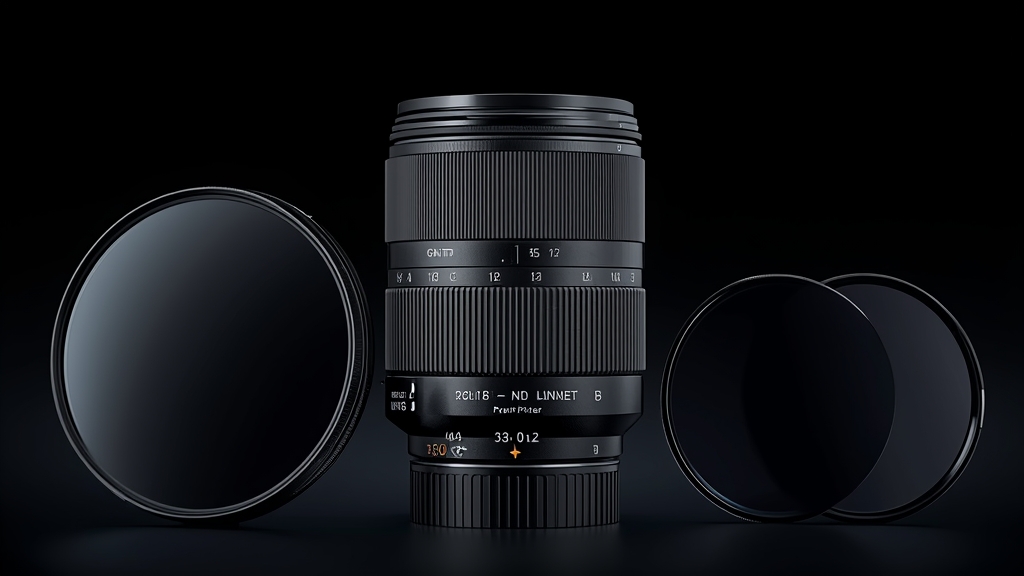

I’ve been shooting with a Sony FX3 for the past two years. Before that, an FS7. Before that, a C300. You know what none of those cameras have in common with a GH5 or a BMPCC? A built-in ND filter system. The FX3 doesn’t have one. Neither does the FX6 in the way an FX9 does — and the FX6‘s built-in NDs are 1/4, 1/16, and 1/64, which is fine until you’re at f/2.8 in open shade and need something in between. Most cinema cameras — REDs, ARRIs aside — send you straight to the filter drawer.
That’s not a complaint. It’s just the reality. If you’re shooting video seriously in 2026, ND filters aren’t optional gear. They’re the difference between a shot and a blown-out disaster. And yet the filter market is full of garbage, overpriced mediocrity, and a few things that are genuinely worth your money. I’ve used all five filters in this article in actual production — documentary fieldwork in Yemen, humanitarian assignments in Bangladesh, and commercial work in Sri Lanka. I’m not testing them on a color chart in a studio. I’m telling you how they perform when it’s 42 degrees, your bag is covered in dust, and you need to change a filter between shots.
Why ND Filters Matter More Than Most Filmmakers Admit
The 180-degree shutter rule exists for a reason. At 24fps, your shutter speed should be 1/48. At 30fps, 1/60. Deviate significantly and motion looks wrong — either too choppy or too blurry. The only way to control exposure without breaking that rule (outside of a dark studio) is aperture or ND filters. But aperture controls depth of field. You want that face sharp against a blurred background? You’re shooting at f/1.8 or f/2. That means in daylight, you’re overexposed by 4–6 stops without an ND.
This isn’t theoretical. In Cox’s Bazar in 2021, I was documenting Rohingya families in a camp. The light was brutal — noon sun, white tarpaulin shelters bouncing light everywhere. I needed f/2 for separation and 1/50 shutter for natural motion. Without a solid 6-stop ND, that shot doesn’t exist. With the wrong filter, the color shifts, skin tones go green or magenta, and you’re correcting in post for hours. With the right filter, you expose correctly, match your other shots, and focus on the people in front of you.
That’s the real cost of a bad ND filter — it’s not just optical quality. It’s time on set, it’s color grading hours, it’s shots you couldn’t get.
Quick Picks: Best ND Filters for Filmmakers in 2026
| Filter | Type | Price Range | Best For |
|---|---|---|---|
| PolarPro QuartzLine Fixed ND | Fixed | $80–$120 | Film sets, maximum sharpness |
| Breakthrough Photography X4 ND | Fixed | $90–$130 | Matte box users, optical quality |
| NiSi True Color Variable ND | Variable (1–5 stop) | $150–$180 | Run-and-gun, minimal cross effect |
| PolarPro Peter McKinnon Variable ND | Variable (2–5 stop) | ~$130 | Solo shooters, color-critical work |
| Tiffen Variable ND | Variable | $60–$100 | Budget filmmakers, controlled lighting |
PolarPro QuartzLine Fixed ND: The Film Set Standard
If you’ve been on a real film set recently, you’ve seen these. The QuartzLine series is PolarPro’s top-tier fixed ND line, built for people who refuse to compromise on optical quality. The glass is cinema-grade fused quartz — the same material used in premium matte box filters — and the color neutrality is as close to perfect as you’ll find in this price range.
I use the 6-stop version most often. It sits at around $100 for 77mm, which is not cheap, but you’re buying something that will outlast multiple camera bodies. The frame is machined aluminum — not the stamped brass garbage that strips when you look at it wrong. The coating repels water, oil, and dust well enough that a quick wipe in the field is usually sufficient.
The sharpness is exceptional. I’ve shot at f/1.4 through this filter and seen zero degradation at the pixel level. Color cast is neutral enough that I don’t think about it on set. On skin tones especially, it’s clean. The QuartzLine doesn’t add warmth or coolness — it just reduces light.
The limitation is obvious: it’s a fixed ND. You need to buy multiple filters to cover different light conditions (3-stop, 6-stop, 10-stop are the most useful triad for filmmaking). That adds up. But if you’re shooting narrative work or anything where maximum image quality is non-negotiable, this is what you put in front of your lens.
Field note: In Yemen, I was switching between a heavily shaded interior and a harsh midday exterior multiple times in a single shoot. Having a 3-stop and 6-stop QuartzLine meant quick, clean swaps — no fiddling with a variable ring. Time matters when you’re documenting something real.
Breakthrough Photography X4 ND: Optical Quality You Can Trust
Breakthrough Photography doesn’t get talked about enough. The X4 ND is, in terms of raw optical quality, competitive with filters costing twice the price. The glass is German Schott optical glass with a multi-resistant coating, and Breakthrough is transparent about their manufacturing in a way most filter brands are not.
Color neutrality on the X4 is excellent. It skews the tiniest bit warm — we’re talking something you’d only notice if you were obsessively comparing against a reference chart. In normal shooting conditions, you won’t see it. Skin tones look right, skies look right, the filter does its job without drawing attention to itself.
What makes the X4 particularly useful for filmmakers is the thin frame design, which makes it compatible with most matte boxes without vignetting issues. A lot of circular screw-on filters cause problems with matte boxes — the frame protrudes enough to catch the matte. The X4 is designed with this in mind. If you’re working with a follow focus and matte box setup, this matters.
The filter is available in stops from 3 to 15, and the 6-stop and 10-stop are the most practical for filmmaking. At $90–$130 depending on size and stop, it’s priced reasonably for what it delivers. The build quality is solid — not QuartzLine-level, but close.
One genuine criticism: the thread coating can feel slightly rough compared to PolarPro, making it a little harder to thread onto lenses quickly. Minor thing, but worth knowing if you change filters frequently.
NiSi True Color Variable ND: The Best Variable ND on the Market
Variable ND filters have a problem: the cross effect. As you rotate the ring past a certain point, you get a dark X-shaped pattern across the frame. It’s physics — two polarizers rotating against each other. Cheap variable NDs hit this problem at 4–5 stops. Good ones push it further. The NiSi True Color Variable ND (1–5 stop version) is designed specifically to minimize this.
It works. Through the full range of 1–5 stops, I’ve never seen the cross effect cause a usable problem with the NiSi. There’s a faint directional shift at the extreme end of the range if you’re looking for it, but it’s not something that shows up in footage at normal apertures. This is the best variable ND I’ve used for run-and-gun documentary work.
Color neutrality lives up to the “True Color” branding. NiSi has done something right here — the filter is remarkably neutral across its range. This is unusual for variable NDs, which typically shift color as you adjust the density. The NiSi holds steady, which means less corrective work in post.
Build quality is pro-grade. The frame is aluminum, the markings are engraved not printed (they won’t wear off), and it has a thread protector on both sides. At $150–$180, it’s the most expensive variable ND in this list. It’s also the best one.
Field note: For documentary work where you’re responding to changing light conditions fast — which is every documentary shoot — a reliable variable ND is worth the premium. The NiSi True Color is what I reach for when I’m operating alone without an AC to swap fixed NDs for me.
PolarPro Peter McKinnon Variable ND: Color Neutral and Field-Friendly
The collaboration filter between PolarPro and Peter McKinnon (PM Edition) targets the content creator and filmmaker who wants solid color neutrality in a variable package without spending NiSi money. At around $130, it sits in the middle of the variable ND market — and it earns its place there.
The color performance is genuinely good. Better than I expected for a filter in this range. PolarPro uses their Cinema Series glass here, and the color neutrality is consistent through the middle of the range (2–4 stops). At the extremes, there’s a slight warm shift, but it’s manageable. For shooting in golden hour or mixed lighting where a little warmth isn’t unwelcome, it’s barely noticeable.
The cross effect becomes visible at the 5-stop extreme, which is within the expected range for a variable ND at this price. The usable range is really 2–4.5 stops, which covers most shooting scenarios. If you need 5+ stops consistently, buy a fixed ND or step up to the NiSi.
The frame is well-constructed and the rotation is smooth. Not as refined as the NiSi, but smooth enough that you won’t accidentally shift density when you don’t mean to. The Peter McKinnon branding is tastefully done — it doesn’t scream “content creator” gear in a way that looks out of place on a documentary set.
For solo shooters who need a reliable, color-neutral variable ND without NiSi pricing, this is a smart choice.
Tiffen Variable ND: The Budget Option That Has Real Limitations
I want to be straight about the Tiffen Variable ND. At $60–$100, it’s tempting if you’re just starting out or working with a tight budget. Tiffen has decades of optical credibility, and this filter does work — up to a point.
The optical quality in the middle range (2–4 stops) is acceptable. Sharpness holds reasonably well, and color cast is manageable in the 2–3 stop zone. But push past 4 stops and the color shifts noticeably — a cool, slightly magenta cast that’s visible on skin tones and requires correction in post. The cross effect appears earlier than on any other variable ND in this list, typically visible around 4–5 stops.
The frame build is the other limitation. The thread coating on Tiffen variable NDs has a reputation for getting stuck, especially after exposure to temperature changes. I had one seize on a Sigma 35mm Art in Dhaka in summer heat — the kind of situation where you cannot be wrestling with a filter ring. I got it off eventually, but I was stressed the whole time.
Where it makes sense: controlled studio environments, indoor documentary settings with stable lighting, or as a learning tool for someone who isn’t yet sure if they’ll commit to the craft. Don’t buy it for run-and-gun outdoor work. Don’t rely on it for anything color-critical that you can’t easily correct.
If your budget is $60–$100 and you need an ND, I’d actually push you to save another $30–$40 and buy the PolarPro Peter McKinnon variable instead. The difference in usable quality is significant enough to justify the stretch.
Variable vs Fixed ND: Which Should You Buy?
This question has a real answer: it depends entirely on how you shoot.
Buy fixed NDs if:
- You’re shooting narrative or scripted work where you control the environment
- Maximum sharpness and color accuracy are non-negotiable
- You have a second shooter or AC who can swap filters between setups
- You’re working with a matte box and want the cleanest optical path possible
- You’re shooting specific, predictable lighting conditions
Buy a variable ND if:
- You’re shooting run-and-gun documentary or news-style content
- You’re operating solo without crew
- Light conditions change unpredictably throughout your shoot
- You’re moving between interiors and exteriors frequently
- You want one filter to cover multiple situations without a bag of glass
My personal kit for documentary work: one NiSi True Color Variable ND on the camera at all times, two PolarPro QuartzLine fixed NDs (3-stop and 6-stop) in the bag for when I need maximum quality on a specific setup. That combination covers 95% of everything I encounter in the field.
Buying Guide: What to Look For
Glass Quality
This is where cheap filters kill your image. Low-quality glass introduces distortion, softness, and color fringing that compounds with your lens’s own characteristics. For filmmaking, you want optical glass — not “HD glass,” not “multi-coated optical resin.” Look for brands that are transparent about their manufacturing. Breakthrough Photography names their glass supplier (Schott). That kind of transparency matters.
Color Neutrality
A filter that introduces a consistent, known color cast is workable — you can correct it. A filter with inconsistent color shift across its range (especially variable NDs) is a nightmare. Before buying any variable ND, search YouTube for color cast tests at different stop settings. Real tests from real shooters, not marketing material.
Frame Construction
Thin frames for matte box compatibility. Brass or aluminum — not die-cast zinc. Check that the threads are cut cleanly; rough threads will eventually cause cross-threading or lens damage. For variable NDs, the rotation feel matters — you need precise control without stiffness or slop.
Coating
Multi-resistant coatings (MRC) repel water, dust, and fingerprints. In fieldwork conditions — rain, humidity, dust storms — coating quality directly affects how much time you spend cleaning glass instead of shooting. All five filters in this list have adequate coatings, but the QuartzLine and NiSi True Color are best in class.
Size Strategy
Don’t buy a different size filter for every lens you own. Buy the size that fits your largest lens and use step-up rings for smaller lenses. For most mirrorless and cinema cameras in 2026, that means 82mm. Your 77mm lenses can use a step-up ring. Your 67mm lenses can use a larger step-up. You save money, carry fewer filters, and have consistent color from the same piece of glass across all your lenses.
Field Use Reality: Dust, Heat, and Quick Changes
In Yemen, filters got covered in fine desert dust constantly. The difference between a filter with good coating and a cheap one is the difference between a quick wipe with a microfiber and spending five minutes trying to clean smearing dust without scratching the glass. I lost shots because of it early in my career before I understood this.
Heat warps cheap filter frames. Aluminum and brass handles temperature extremes better than whatever alloy the budget brands use. I’ve had a $30 filter become functionally stuck in 45°C heat. I’ve never had that happen with QuartzLine or NiSi.
Quick changes: fixed NDs win. Variable NDs are faster to adjust but slower to fully swap. If you’re pulling a camera from inside a building to outside for a tight window shot — think fixer situations, breaking news moments, or a subject about to walk away — a fixed ND you screw on fast is faster than finding the right density on a variable ring. Know your filters. Know exactly what stop each one is and what aperture and shutter pairing it requires. That knowledge becomes muscle memory.
Keep a filter case that’s dustproof. Pelican makes small filter cases. Alternatively, individual lens pouches that zip closed. Never stack unprotected filters in a bag pocket. Sand is everywhere, always.
Final Recommendations
Here’s the short version for people who’ve read this far and just want an answer:
Best overall fixed ND: PolarPro QuartzLine. Buy the 6-stop first, add a 3-stop or 10-stop based on your typical shooting conditions. This is what belongs on a professional cinema camera.
Best for matte box users: Breakthrough Photography X4 ND. The thin frame and optical quality make it the logical choice if you’re running a matte box rig.
Best variable ND: NiSi True Color Variable ND. Minimal cross effect, genuine color neutrality, pro build. Worth every dollar of the premium over cheaper variables.
Best variable ND for the money: PolarPro Peter McKinnon Variable ND. If you can’t stretch to the NiSi, this is the next best option. Color performance is genuinely good through the usable range.
Budget option: Tiffen Variable ND — but only if the budget truly won’t stretch. Know its limitations going in and use it in controlled conditions.
One last thing: if you’re shooting on a Sony FX3, FX6, or any camera without built-in NDs and you’re serious about the work, you have no excuse for not having at least one quality ND filter in your kit by now. It’s not a luxury. It’s as fundamental as having the right memory cards. The 180-degree shutter rule isn’t optional, and neither is controlling your depth of field. Get the glass. Shoot better.

Mehedi Rahman is a freelance multimedia producer and impact filmmaker with 12+ years of experience. He has shot documentary and humanitarian work across Yemen, Bangladesh, and South Asia for the World Food Programme and international media. Based in Sri Lanka, he specialises in visual storytelling that moves people — and gear that makes it possible.
One response to “Best ND Filters for Filmmakers in 2026: Tiffen, PolarPro, and Breakthrough Compared”
Just picked up the NiSi True Color Variable ND based on this guide. The lack of cross effect at higher stops is real — I was using a PolarPro before and the colour shift at 6-8 stops was unusable for anything that needed post-production colour matching.