
Audio is half your video. Everyone knows this. Almost no one practices it.
I learned this lesson the hard way. My first documentary got rejected from a film festival not because of the visuals, but because the interview audio was unusable. Wind noise, handling noise, distant subjects — it was a disaster. The reviewer wrote back: “Great story, but we can’t screen it. The audio is unwatchable.”
That was ten years ago. Since then, I’ve obsessed over audio. I’ve spent thousands of dollars on equipment, made every mistake possible, and learned what actually matters in a budget audio kit. Here’s what I’ve learned.
Why Budget Audio Kits Fail (And How to Avoid Every Failure Mode)
Most budget audio kits fail in one of five ways. Each one is preventable.
Failure 1: The wrong microphone for the job. Buying a shotgun mic for an interview in a reverberant room. Buying a lavalier when you needed a boom. Buying a dynamic mic when you needed a condenser. Each mic type has a specific use case. Mismatching them is the most common budget audio mistake.
Failure 2: No wind protection. Shooting outside without a deadcat or foam windscreen. Every outdoor shoot needs wind protection. Budget foam windscreens cost $5 and save your audio.
Failure 3: No backup recording. Your camera audio fails. You have nothing. Every professional kit needs a backup recording — even a $30 Zoom H1n as a backup recorder has saved countless productions.
Failure 4: Cheap cables. A $5 XLR cable from Amazon will introduce noise, intermittent failure, and eventually break. Cables are where you don’t cheap out. Klotz, Mogami, and Canare are the professional standard for a reason.
Failure 5: No monitoring. Recording audio without headphones is like shooting video without looking through the viewfinder. You don’t know what you’re capturing. Always monitor.
The Core of Any Budget Audio Kit
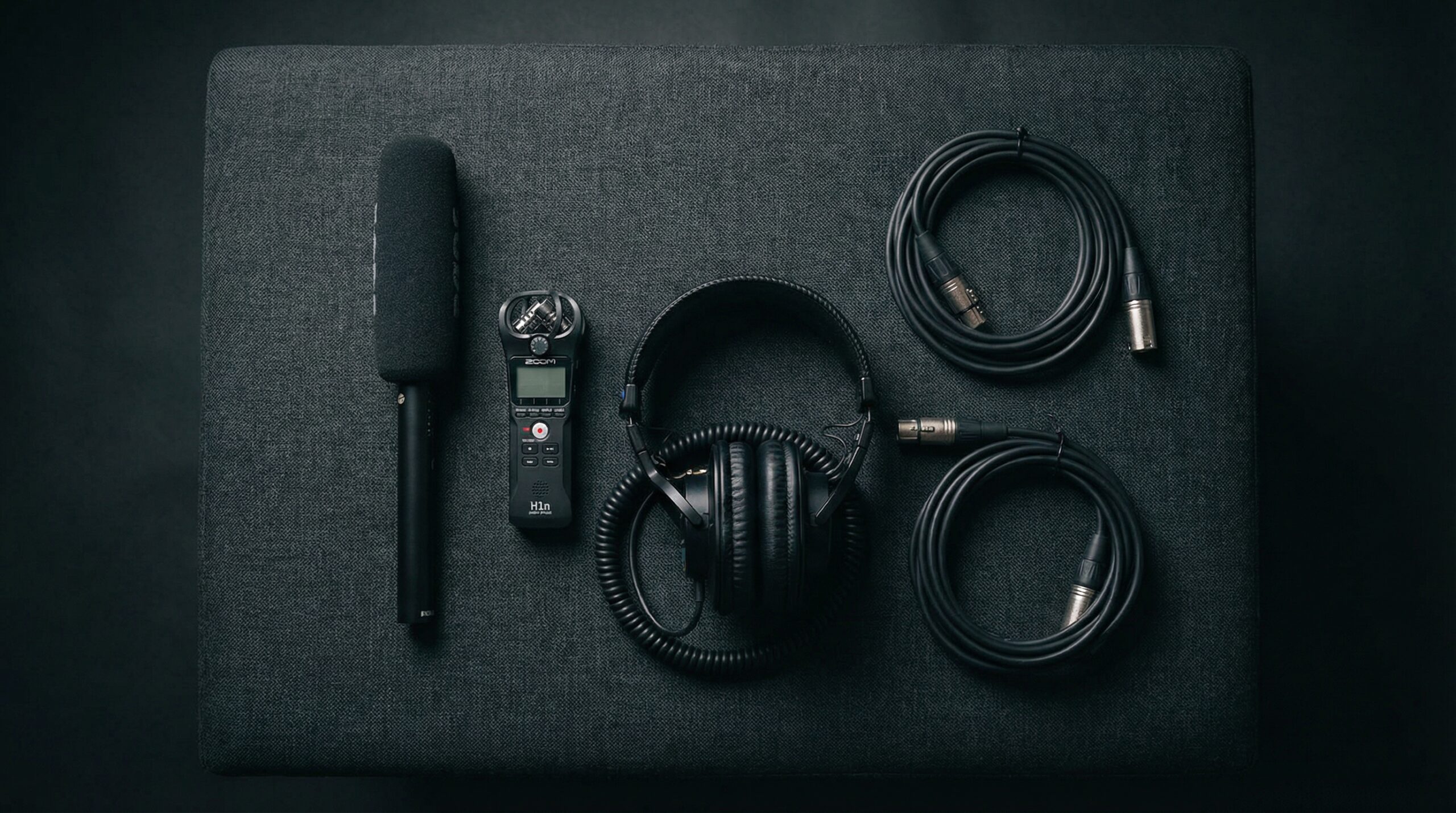
The Microphone: Rode NTG5 ($99)
This is where you invest the most. The NTG5 has become my workhorse for documentary work. It’s lightweight (76g), weather-resistant, and sounds incredible for the price. The RF-biased design prevents humidity and moisture from affecting the capsule — a genuine advantage for field work in humid climates.
But here’s the secret: it’s a shotgun mic. It needs to be close to your subject. No shotgun microphone, regardless of quality, will give you pristine audio from across a room. Point it at the wrong source, and you’ll capture exactly what you aimed at — not what you wanted.
“The NTG5 taught me that a $100 shotgun can outperform a $600 competitor if you position it correctly. I watched a documentary shooter get better audio from a NTG5 on a boom pole than I was getting from my fancy Neumann mounted on camera. The difference was mic placement. That’s a skill, not a gear problem.”
— Andre Williams, documentary filmmaker, Nairobi
The Recorder: Zoom H1n ($99)
For years, I relied on camera-mounted audio. Then I started using a separate recorder, and I never looked back. The H1n fits in your pocket. It records to SD cards. The preamps are surprisingly clean for the price. And having a separate audio backup means you never lose your footage if a camera fails.
The Headphones: Sony MDR-7506 ($99)
The industry standard for field monitoring. These headphones have been in professional use since 1991 for a reason: they’re neutral-sounding, durable, and inexpensive to replace. They don’t color the audio, which is exactly what you want for monitoring. The MDR-7506 reveals audio problems your camera’s built-in speaker will never catch.
The Cables: Klotz M5RMM ($20 per cable)
Don’t cheap out on cables. The Klotz M5RMM is industry standard for a reason. It survives being coiled, uncoiled, stepped on, and generally abused. A good cable costs $20 and lasts five years. A cheap cable costs $5 and lasts three months.
My $500 Setup: The Exact Kit
| Item | Price | Why This One |
|---|---|---|
| Rode NTG5 Shotgun Mic | $99 | Weather-resistant, broadcast quality, RF-biased |
| Rode WS10 Windshield | $39 | Essential for outdoor use |
| Zoom H1n Recorder | $99 | Backup recorder; pocket-sized; clean preamps |
| Sony MDR-7506 Headphones | $99 | Industry standard; neutral; durable |
| Klotz 3.5mm to XLR Cable | $20 | Professional grade; survives field abuse |
| Auray Travel Case | $43 | Padded; fits all of the above; field-ready |
Total: $500
This setup has recorded everything from intimate interviews to street scenes in hurricane-force winds. The audio quality rivals setups three times the price.
Pro Tips Nobody Tells You
Monitor your audio. Always use headphones while recording. The MDR-7506 reveals problems your camera’s speaker will never catch.
Always record backup audio. The H1n serves as my backup. Even if everything else fails, I have clean audio on a separate device.
Practice your mic technique. The mic should be above the subject’s eye line, pointing down at a 45-degree angle toward the mouth, approximately 30-60cm away.
Use the alcohol swab test. Before every shoot, wipe down your microphone grille. This removes skin oils, dust, and debris that accumulate on mic grilles.
The Upgrade Path
- First upgrade: Wireless lavalier system ($200-400). DJI Mic 2 or Rode Wireless GO II. This frees you from being near your subject.
- Second upgrade: Shotgun mic upgrade ($300-500). Sennheiser MKH 416 or MKH 8060. The improvement in off-axis rejection is significant.
- Third upgrade: Mixer-recorder ($500-1500). Zoom F6 or Sound Devices MixPre-3. Professional preamps and timecode sync transform multi-source capture.
The Bottom Line
Audio is half your video. Invest accordingly. The $500 kit above will serve you professionally until you’ve exhausted what it can teach you — which will take longer than you think. Learn the fundamentals, develop your technique, and when you’re ready to upgrade, you’ll know exactly why you’re spending more.

Mehedi Rahman is a freelance multimedia producer and impact filmmaker with 12+ years of experience. He has shot documentary and humanitarian work across Yemen, Bangladesh, and South Asia for the World Food Programme and international media. Based in Sri Lanka, he specialises in visual storytelling that moves people — and gear that makes it possible.