
I’ve shot in conflict zones, through monsoon downpours, and in refugee camps where the last thing you can afford is equipment failure. This review is written from that world — not from a studio desk.
Quick Verdict
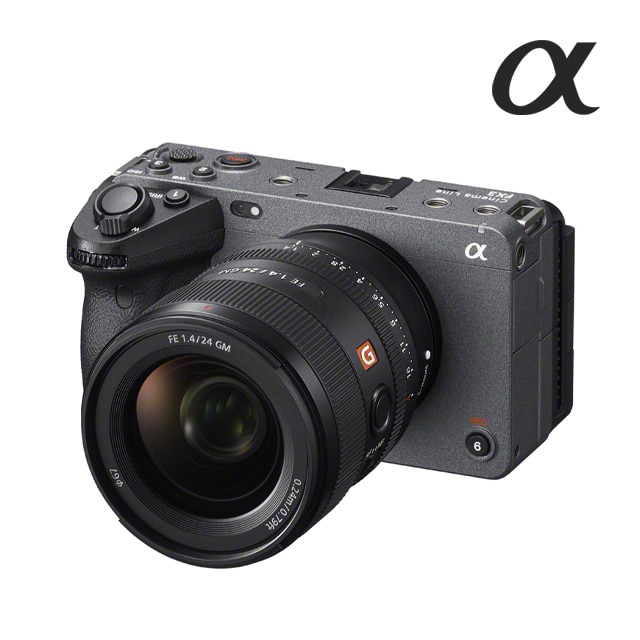
The Sony FX3 is one of those rare cameras that does almost everything right. Full-frame sensor. Cinema-grade low-light. Best autofocus on the market. All in a body you can fit in a backpack. For working filmmakers who shoot alone or with small crews, it remains the most capable tool at this price — even in 2025, four years after release.
| Spec | Detail |
|---|---|
| Sensor | 12.1MP Full-Frame BSI Exmor R CMOS |
| Video | 4K up to 120fps, 10-bit 4:2:2 |
| ISO Range | 80–102,400 (expandable to 409,600) |
| Dynamic Range | 15+ stops (S-Log3) |
| Autofocus | 627-point phase-detection, Real-time Eye AF |
| Weight | 630g (body only) |
| Price | ~$3,899 (body + XLR handle) |
Who Is This Camera For?
Not everyone. That’s the honest starting point.
The FX3 is built for the filmmaker who needs to move fast, shoot in difficult conditions, and deliver broadcast-quality footage without a full crew. Documentary shooters. Run-and-gun videographers. Solo wedding cinematographers. Journalists covering stories in places where a large camera rig makes you a target.
If you shoot mostly stills, or you’re a studio photographer who occasionally does video — this probably isn’t your camera. If you need built-in ND filters (and don’t want to carry external ones), that’s a real limitation here. We’ll cover it honestly later.
Build Quality: Lighter Than It Should Be
630 grams. For a full-frame cinema camera. That number still surprises people when they pick it up for the first time.
The magnesium alloy body has weather sealing — not waterproof, but resistant enough for light rain and dust. The grip is deep and natural. A full day of handheld shooting doesn’t destroy your shoulder in the way a heavier rig would. That’s not a small thing. Cinematographer River Shepherd put it bluntly:
“I had a period in my career where I lugged around giant cinema cameras that weighed more than me, simply because they came in a cinema body. This period left me with a permanent shoulder injury that I still struggle with today. At one point the shoulder pain was so bad that I had decided to quit and change careers. I firmly believe the FX3 saved my career.”
— River Shepherd, cinematographer and director
The 3-inch fully articulating touchscreen is legitimately useful in the field. It tilts, flips, and rotates through 270 degrees. For solo operators doing talking-head interviews, vlogging, or camera placement in tight spaces — this changes how you work.
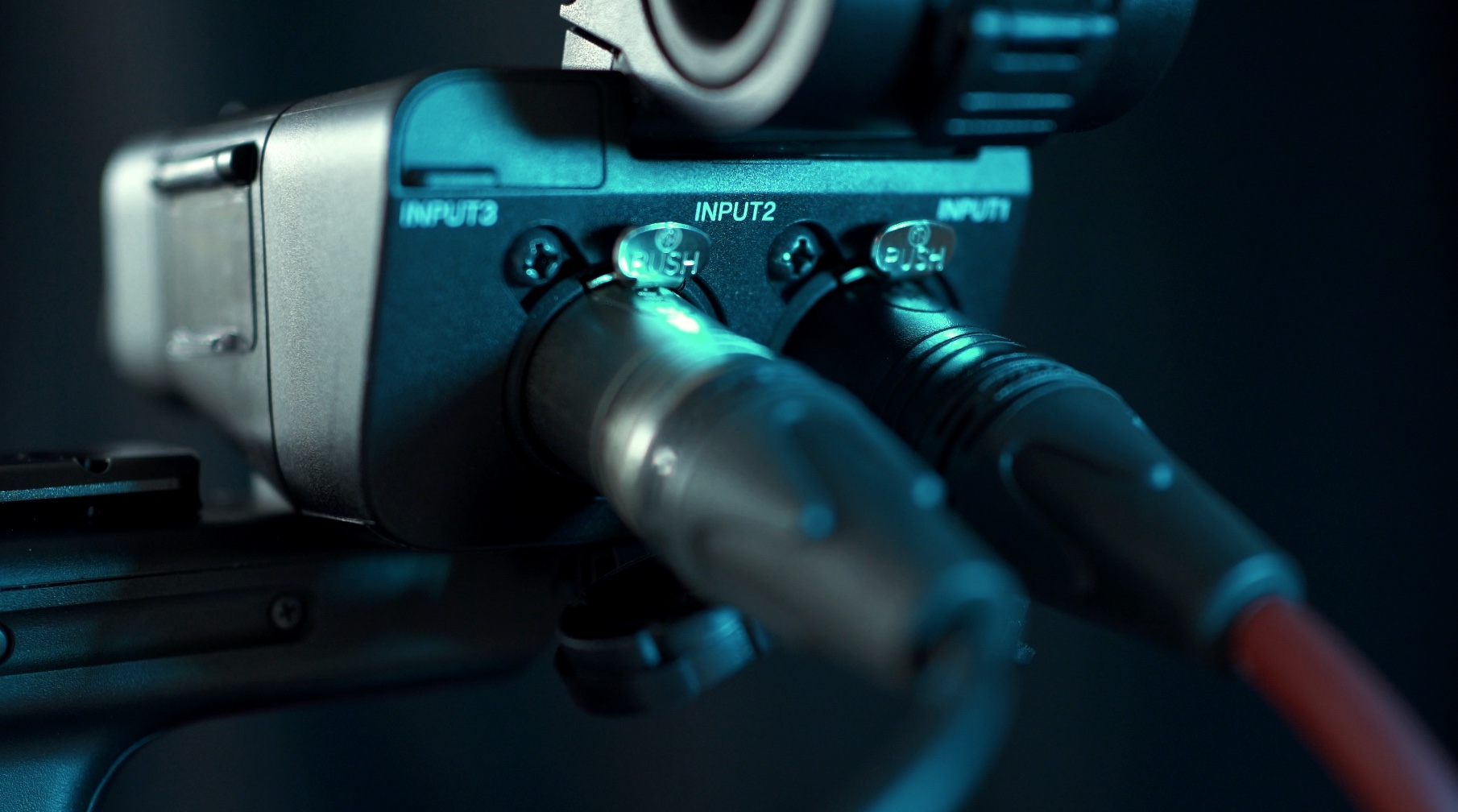
The XLR handle unit (included in the box) slots on top and transforms the camera. Two XLR/TRS combo jacks with 48V phantom power. 4-channel 24-bit LPCM recording. You can run a wireless lav into INPUT1 and a boom into INPUT2 and not touch a separate audio recorder all day. When you want the compact body for gimbal work, the handle comes off in seconds.
Low Light: Where the FX3 Earns Its Price Tag
The 12.1-megapixel full-frame BSI Exmor R CMOS sensor is the same family as the a7S III — Sony’s dedicated low-light machine. This is not a marketing claim. The ISO performance is genuinely exceptional.
Native ISO goes to 102,400, expandable to 409,600. In practical terms: ISO 12,800 is clean and usable. ISO 25,600 shows some noise but remains filmic — the grain is texture, not damage. ISO 51,200 is for emergencies, but emergencies happen in the field, and having the option matters.
Cinematographer Jon Fraser used the FX3 to shoot NYX — a short film that won the Golden Firefly (Luciola d’Or) Award for Best Super Short Film at the Cannes World Film Festival in 2025. The shoot involved bold reds, high contrast, and low light. Fraser’s take:
“In terms of lighting, we had this red theme overall. Bold reds, high contrast, and low light. That’s part of why I was inclined to use the FX3 because I knew it could handle it. I knew I could use really small lights, and it would look great.”
— Jon Fraser, cinematographer (NYX, Cannes 2025)
Dynamic range in S-Log3 hits around 15 stops — competitive with cameras at twice the price. In mixed lighting situations (a window behind your subject, a dark room with one practical light), that latitude means you can expose for faces and still recover detail in shadows and highlights in post. For anyone shooting in uncontrolled environments, that headroom is essential.
4K 120fps: The Spec That Still Impresses
Full-frame 4K at 120 frames per second. When the FX3 launched in 2021, that was genuinely groundbreaking. In 2025, it’s still one of the better implementations at this price point.
The recording formats are comprehensive. For most professional workflows, XAVC S 4K at 200Mbps in 10-bit 4:2:2 is the sweet spot — broadcast-quality, manageable file sizes, and plenty of headroom for grading. Director Bulent Ozlarusso, who worked with Fraser on NYX, put it this way:
“I could push and pull [the codec] all day long. I put a heavy grade on it, and it didn’t break the image. The balance between relatively small file sizes, image quality and dynamic range was on point.”
— Bulent Ozlarusso, director
For maximum quality, XAVC S-I (intra-frame) goes up to 600Mbps in 4K — that’s what you use when you know the footage is going to be heavily graded. If you want true RAW, 16-bit output via HDMI to an external recorder (like an Atomos Ninja) is available.
Dual CFexpress Type A / SD card slots give you flexibility: shoot to both simultaneously as a backup, or use CFexpress for the high-bitrate recording and SD as overflow. Practical design thinking that matters on long shooting days.
Autofocus: Still the Best
Sony’s Real-time Tracking and Eye AF system is the best autofocus available in a cinema camera. That statement was true in 2021. It remains true in 2025.
627 phase-detection points across the full frame. Human and animal eye detection that works in real-time, even with moving subjects, partial occlusion, and difficult lighting. It handles subjects walking toward camera in low light, multiple people in frame, and fast-moving action with a confidence that no competing system at this price matches.
For documentary and run-and-gun work — where you cannot stop and perform a manual focus pull — this changes the quality of what’s possible as a solo operator. You stay on the story instead of fighting the camera.
Watch Before You Buy
Before spending $3,900, it’s worth watching people who have actually used the FX3 extensively in the field. This four-year retrospective covers real production experience:
Proof of Concept: Hollywood Used It
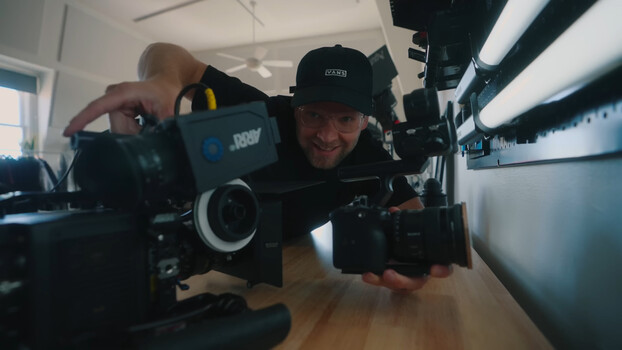
In 2023, director Gareth Edwards shot The Creator — an $80 million science fiction film distributed by 20th Century Studios — primarily on Sony FX3 bodies. That’s not a story about a camera being “good enough.” That’s a story about a camera being the deliberate choice of a director who wanted mobility, flexibility, and cinema-quality images on a demanding shoot.
The FX3’s size let the crew move faster, access locations that a larger rig couldn’t, and capture moments with a naturalness that’s difficult to achieve when the camera demands attention.
The Honest Drawbacks
No camera is perfect. Here’s what the FX3 gets wrong — or at least, what it doesn’t have:
No Built-In ND Filters
This is the most common complaint, and it’s legitimate. Shoot outdoors in daylight and you need external NDs — variable or screw-on. It adds cost, weight, and a step to your workflow. The FX6, which costs roughly twice as much, has built-in electronic ND filters. If outdoor shooting is your primary use case, factor in another $100–200 for a good variable ND.
No Viewfinder
The a7S III has an EVF. The FX3 doesn’t. In direct sunlight, the LCD screen can be difficult to judge exposure accurately. An external monitor (Portkeys, Atomos, SmallHD) solves this but adds to your rig weight and cost.
Battery Life Requires Planning
Approximately 95 minutes of actual recording per NP-FZ100 battery under CIPA standards. Real-world usage with 4K recording and monitor brightness up is typically less. Budget for three to five batteries for a full shooting day. They’re around $50–60 each for genuine Sony, less for third-party.
No Internal RAW
RAW output requires an external recorder via HDMI. For most professional workflows — especially those delivering to broadcast or streaming — the internal 10-bit 4:2:2 codec is more than sufficient. But if you need internal RAW as a hard requirement, the FX3 isn’t your camera.
FX3 vs The Competition
| Camera | Price | Sensor | Key Advantage | Key Weakness vs FX3 |
|---|---|---|---|---|
| Sony FX3 | ~$3,899 | Full-frame | Size, AF, low-light | No built-in NDs |
| Sony FX6 | ~$6,000 | Full-frame | Built-in NDs, pro body | 2x the price, heavier |
| Canon EOS C70 | ~$4,500 | Super 35 | Built-in NDs, Canon colors | Smaller sensor, weaker AF |
| Blackmagic BMPCC 6K Pro | ~$2,000 | Super 35 | Price, RAW recording | Mediocre AF, battery life |
| Sony a7S III | ~$3,500 | Full-frame | Has EVF, slightly cheaper | Not a cinema body, no XLR |
For most working filmmakers, the FX3 is the most practical option at its price. The FX6’s built-in NDs are genuinely useful, but paying $2,000 more for that feature alone is a hard case to make unless it solves a specific workflow problem you have every shoot.
A 2.5-Year Perspective
Final Take
Four years in, the Sony FX3 has earned its reputation in the field. Hollywood used it. Award-winning short filmmakers chose it. Working documentary shooters trust it on jobs where failure isn’t an option.
The missing built-in NDs are a real limitation. The battery life requires planning. If you need a viewfinder or internal RAW, look elsewhere. But if you’re a working filmmaker who needs a full-frame cinema camera that you can take anywhere, put on a gimbal, shoot in near-darkness, and trust to keep focusing when you’re too busy watching the story to watch the camera — the FX3 is still the one to beat.
“For aspiring filmmakers or working professionals tired of looking for the perfect camera: it exists folks, it’s the FX3. It’s more than a camera, it’s freedom.”
— River Shepherd, cinematographer
Buy the Sony FX3
- B&H Photo: Sony FX3 (ILME-FX3) — typically ships fast, reliable grey-market protection
- Amazon: Check current pricing and bundle deals
- Adorama: Good for trade-in credit if you’re upgrading from another body
Prices fluctuate. Check current pricing before purchasing.